How to Choose a Residential Garage Door That Actually Suits Your House
A garage door is one of the largest visible surfaces on your house and one of the hardest-working moving parts in it. Here's how to actually choose one.
September 7, 2026 · 3 min read
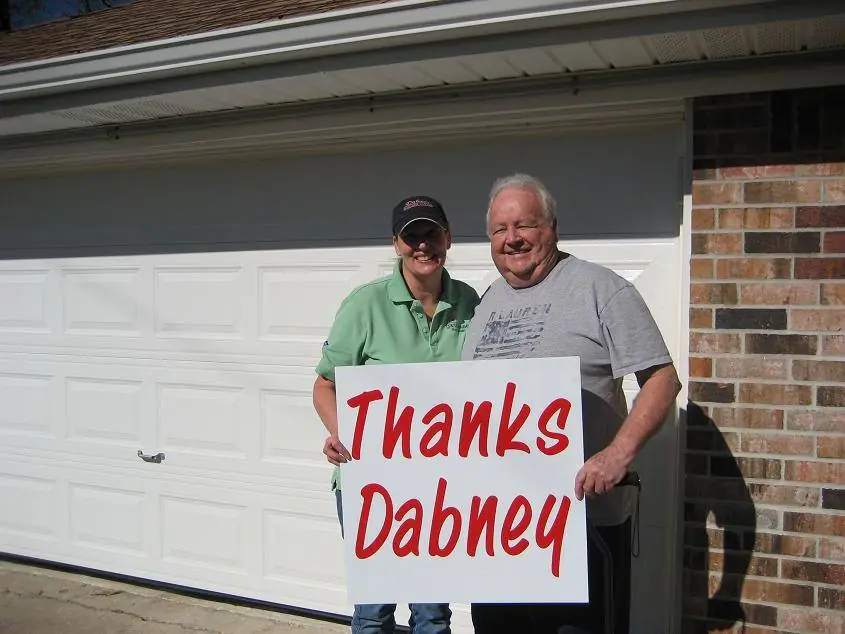
A garage door is one of the biggest single features on the front of most houses, and it's also one of the only parts of the house that moves on a track under real mechanical load, day after day. Choosing one isn't just about picking a color. Material, insulation, and the operator behind it all matter, and they matter differently depending on what your house actually needs.
Steel: the standard for a reason
Most residential garage doors are steel, and for southeast Texas, that's usually the right call. Steel handles humidity and coastal air better than untreated wood over the long run, holds up to everyday impact from a bike or a car mirror without denting as easily as thinner materials, and takes paint and finish well if you want a custom color to match your house. We install and service steel doors from Clopay, Amarr, C.H.I., and Raynor, and the differences between those brands mostly come down to gauge, finish options, and hardware, which is worth talking through for your specific house rather than picking off a brochure.
Insulation: not just a winter question
An insulated door has a layer of foam, usually polystyrene or polyurethane, sandwiched between two steel skins. On the Gulf Coast, people sometimes assume insulation is a cold-climate feature and skip it, but that misses half of what it actually does. An insulated door also helps keep a garage cooler in the brutal middle of a Texas summer, which matters a lot if the garage is attached to the house, sits under a bedroom, or is used as a workshop or extra living space. It also adds real structural rigidity to the door itself, which shows up as a steadier, quieter ride and less flex in high wind.
Single vs. double, custom sizing
Whether you need a single door, a double door, or two single doors side by side depends on your garage layout, not just preference. We build and install doors in custom style, color, and size to fit the actual opening on your house, rather than forcing a standard size where it doesn't quite fit. If you're replacing an older door, this is also the point where it's worth checking whether the current opening, track, and header are still in good shape, since a new door installed on old, worn hardware won't perform the way it should.
The opener matters as much as the door
- Half-horsepower openers suit most single residential doors.
- Heavier or insulated doors, and double-wide doors, often need a stronger motor to lift the added weight smoothly.
- LiftMaster, Genie, and Guardian openers we install are all MyQ smart-app compatible, so you can check and control the door from your phone.
- The right opener for a heavier insulated door isn't automatically the same one that came with your old, lighter door.
Why we walk through this with every customer
We're factory trained, authorized, and insured installers for LiftMaster, Genie, and Guardian operators, and we sell, install, and service Raynor, Clopay, Amarr, and C.H.I. doors as well. There's no job too large or too small for us, whether that's a full replacement on a house you just bought or matching a single door to the rest of a home you've lived in for years. As a family-owned business, when you call, you're talking to James or Julie Dabney, not a call center reading from a script.
If you're planning a new door, whether it's a straightforward replacement or you want to talk through material and insulation options for your specific house, call (409) 892-1543 and we'll help you figure out what actually fits.
Dabney Garage Doors, (409) 892-1543
Call (409) 892-1543More articles
Why Garage Door Springs Break, and Why It's Not a DIY Repair
The spring is the part doing almost all the work every time your door opens. Here's why it eventually fails, and why that repair belongs to a technician, not a Saturday afternoon.
Belt-Driven vs. Chain-Driven Garage Door Openers: Which One Actually Fits Your House
The two designs move a door the same way. What's different is noise, cost, and what sits above your head every time you open it.