What Hurricane Season Actually Demands From Your Gulf Coast Home's Openings
Rolling shutters, clear panels, and security screens all protect an opening, but they don't protect it the same way. Here's what each one is actually for.
September 7, 2026 · 3 min read
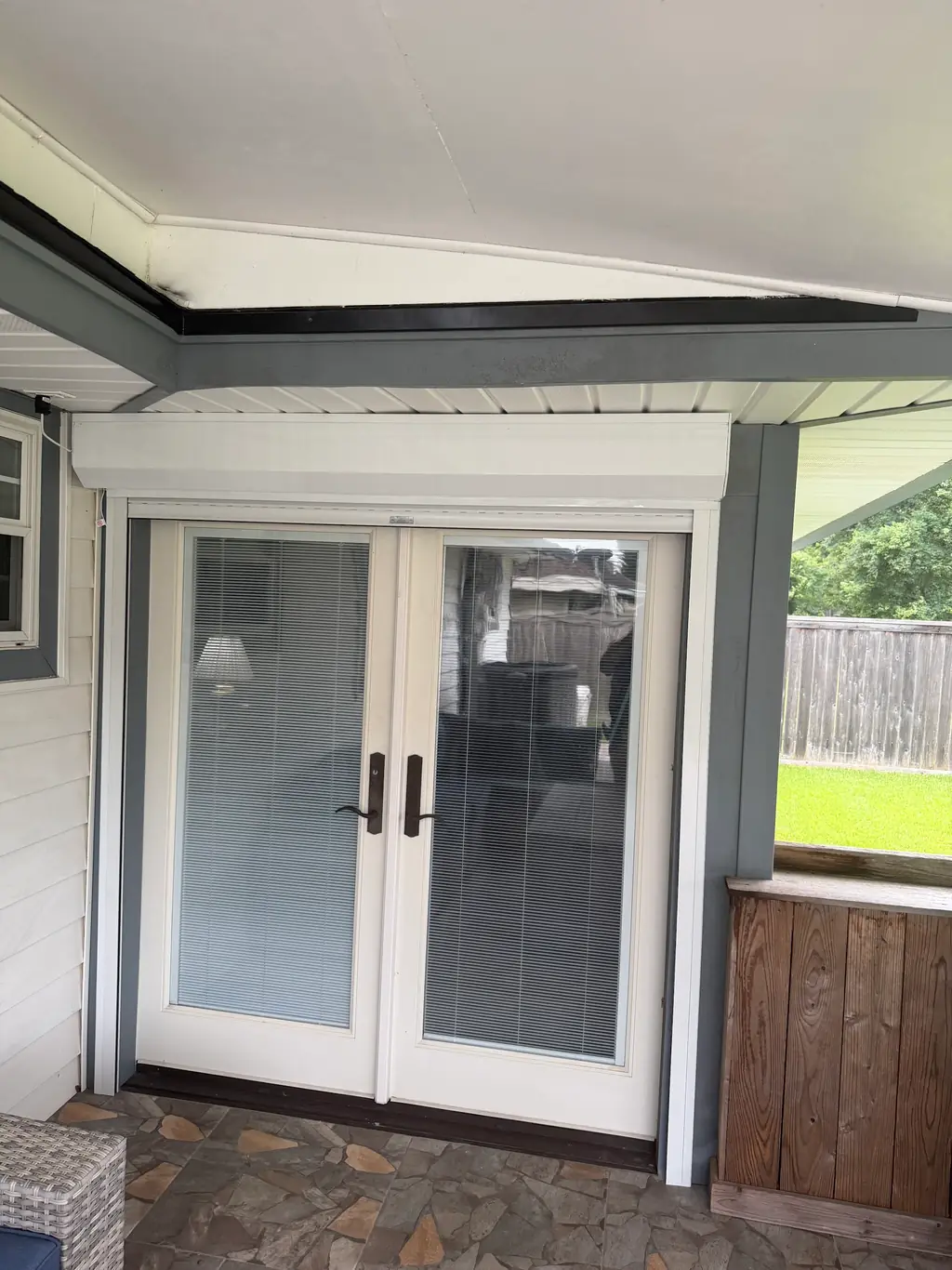
If you've lived on the Gulf Coast for more than one storm season, you already know the drill: watch the forecast, decide how seriously to take it, and figure out what's actually protecting your windows and doors when the wind picks up. In Port Neches, Beaumont, Port Arthur, Nederland, Groves, and Orange, that's not a once-a-decade question. It comes around every year, and the options for protecting an opening aren't all the same thing wearing a different name.
Rolling hurricane shutters
A rolling hurricane shutter is a solid, segmented curtain that rolls down over a window or door opening from a housing mounted above it, the same basic mechanism as a garage door but sized and engineered for wind and impact protection instead of vehicle access. Because they're permanently mounted, rolling shutters can be closed in minutes rather than requiring you to haul panels out of storage, measure, and bolt them into place while a storm is bearing down. That speed matters more than it sounds like it should when a forecast tightens up two days before landfall and everyone in town is trying to prep their house at once.
Clear hurricane shutters (storm panels)
Clear hurricane shutters are corrugated storm panels, similar in shape to the metal panels you've probably seen bolted over storefronts, but made from a clear, impact-rated material instead of solid metal. The obvious advantage is light. A house boarded up with solid panels goes dark inside for the entire time they're up, which can be days if you evacuate or if the power's out and there's nothing else to do but wait it out at home. Clear panels give you the same impact protection while still letting daylight into the house, which matters a lot more than people expect once you're actually living behind them for a few days.
Tapco security screens
Tapco screens are a mesh-based security and storm screen system, and one detail worth knowing: they're approved and used for handicap accessibility applications, which tells you they're built to allow normal daily use of an opening, not just to seal it shut before a storm. That makes them a different kind of solution than shutters or panels. They're suited to openings you want protected but still want to use regularly, rather than a covering you only deploy when a storm is inbound.
So which one is right for your house
- Openings you want to protect fast, with minimal setup time once a storm is tracking toward the coast, favor rolling shutters.
- Rooms you'll actually be living in while boarded up, where losing all natural light for days is a real problem, favor clear storm panels.
- Openings that need day-to-day accessibility along with storm and security protection are a fit for Tapco screens.
- Most homes end up using more than one type across different openings, front entry versus patio doors versus garage, rather than one solution for the whole house.
Why this isn't a last-minute decision
Every one of these systems has to be sized and mounted correctly for the specific opening it's protecting, and that's not something to figure out for the first time with a storm three days out. We've installed hurricane security systems across the Golden Triangle for over fifteen years, on garage doors, patio openings, and entryways, and the homeowners who come out of a storm season the least stressed are almost always the ones who had their protection installed and tested well before the first named storm of the year showed up on a forecast map.
If you're weighing rolling shutters, clear panels, or Tapco screens for your home, call us at (409) 892-1543 and we'll talk through what actually fits your openings, not just what's in stock.
Dabney Garage Doors, (409) 892-1543
Call (409) 892-1543More articles
Why Garage Door Springs Break, and Why It's Not a DIY Repair
The spring is the part doing almost all the work every time your door opens. Here's why it eventually fails, and why that repair belongs to a technician, not a Saturday afternoon.
Belt-Driven vs. Chain-Driven Garage Door Openers: Which One Actually Fits Your House
The two designs move a door the same way. What's different is noise, cost, and what sits above your head every time you open it.